

Our Story
Born under the sun
of Kalamata.
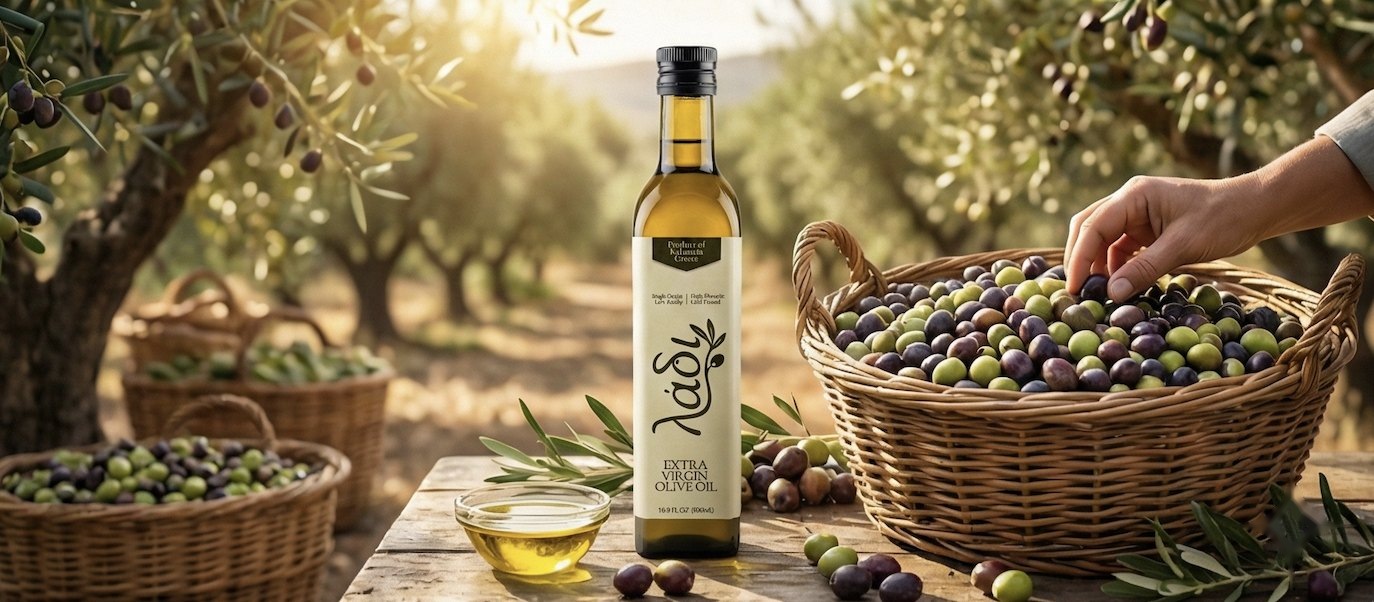
In the heart of the Peloponnese, where rugged mountains give way to shimmering sea, the olive tree has been a sacred part of life for more than three thousand years.
It’s here — in Kalamata, Greece, where the air carries wild herbs and sea salt — that our olives are born. Not sourced. Not blended. Born, in one region, on groves that one family has tended for generations.
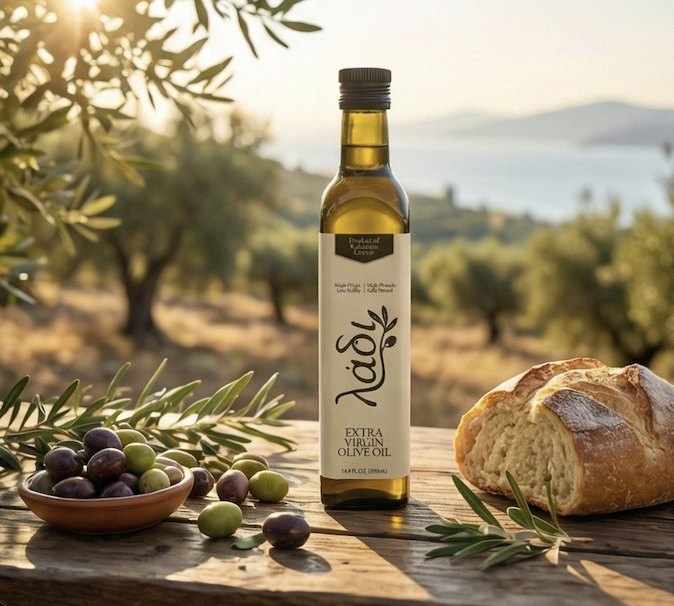
λάδι (pronounced LA-thi) is simply the Greek word for olive oil. We chose it because there was no need to invent a name for something this old. What matters isn’t the branding — it’s where the fruit came from, how quickly it was pressed, and what the laboratory says when the numbers come back.
November
Everyone rises before dawn.
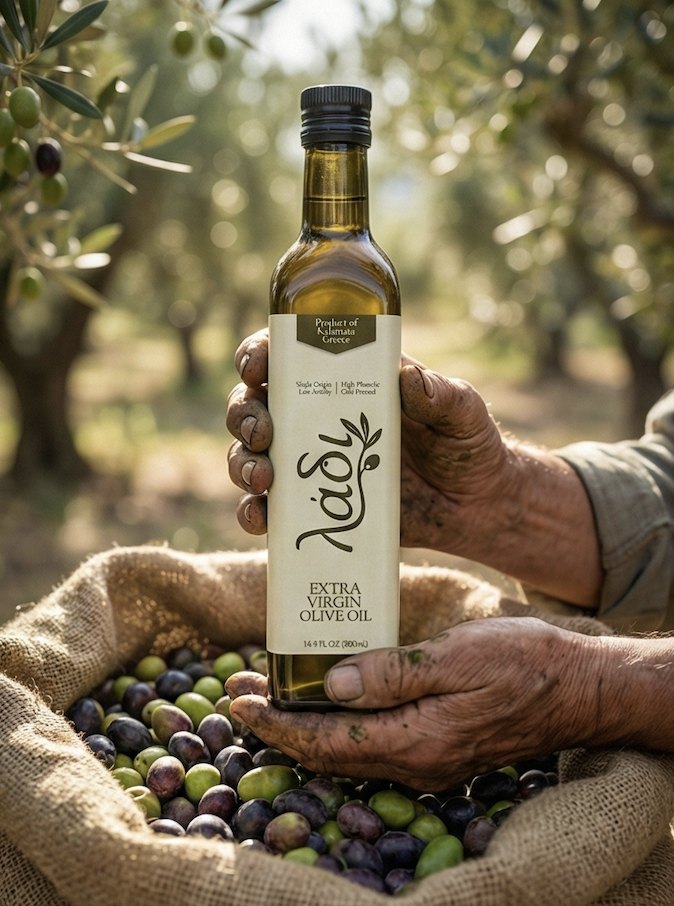
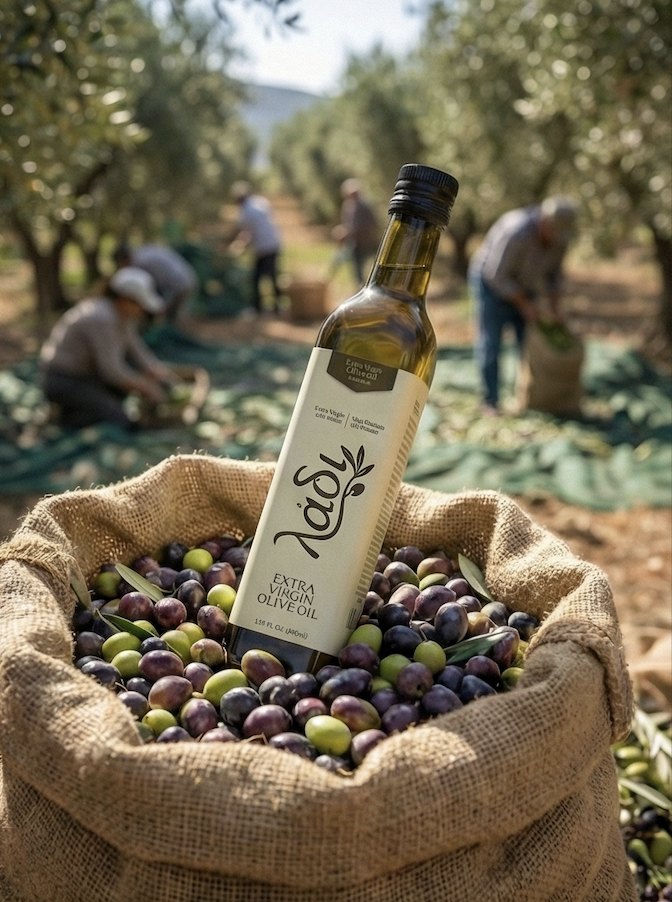
Each November, families across the region wake in the dark and head into the groves. The olives are combed from the branches by hand, gently, so the fruit is never bruised — bruising starts oxidation, and oxidation is the enemy of everything good in an olive.
Nets go down beneath the trees. The fruit is gathered, sorted, and moved to the mill the same day. It’s slower and more expensive than machine harvesting. It’s also the only way to get oil that tastes like this.
Cold extraction
Pressed within hours,
never with heat.
Olive oil is a fruit juice, and like any fruit juice it is best the moment it’s made. Ours is cold-extracted mechanically — no heat, no solvents, no refining — within hours of picking.
Heat would raise the yield. It would also strip out the volatile aromatics and burn off the polyphenols that give the oil its peppery finish and its shelf life. We accept the smaller yield. It’s the whole point.
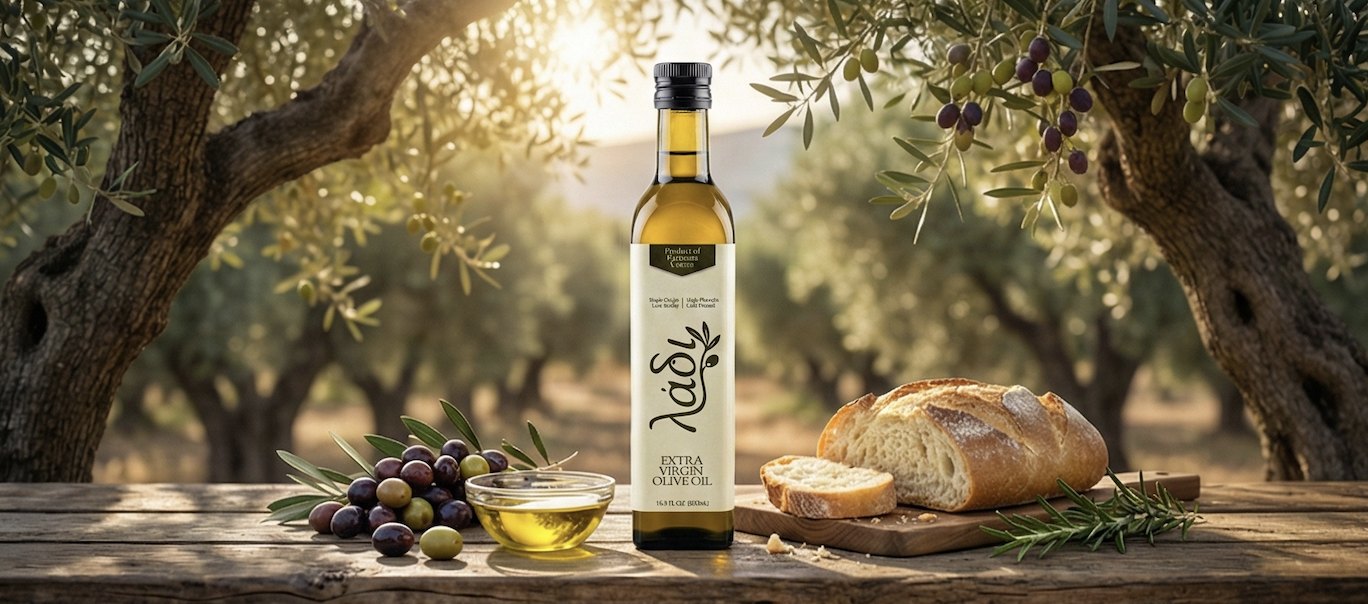
Earth, sea, and sunlight, in balance.The Messenian valley, Peloponnese
From grove to table
Traceable, tested, and published.
Every stage — from the grove to your kitchen — is traceable. Each batch is analysed by certified Greek laboratories against the world’s strictest standards for extra virgin quality.
We publish the two numbers that matter most. Free acidity tells you how carefully the fruit was handled between the tree and the mill. Polyphenol content tells you how much of the olive’s natural antioxidant character survived into the bottle — and how long the oil will keep its edge.
Why we bottle it
Food is the first medicine.
In Greek homes, the oil isn’t a finishing touch — it’s the foundation. It goes on bread in the morning, over vegetables at lunch, into everything at dinner. A household gets through litres, not millilitres.
That’s the tradition λάδι comes from, and it’s the standard we hold the oil to. Not a bottle you save for special occasions, but one good enough that you’d want to use it every single day.