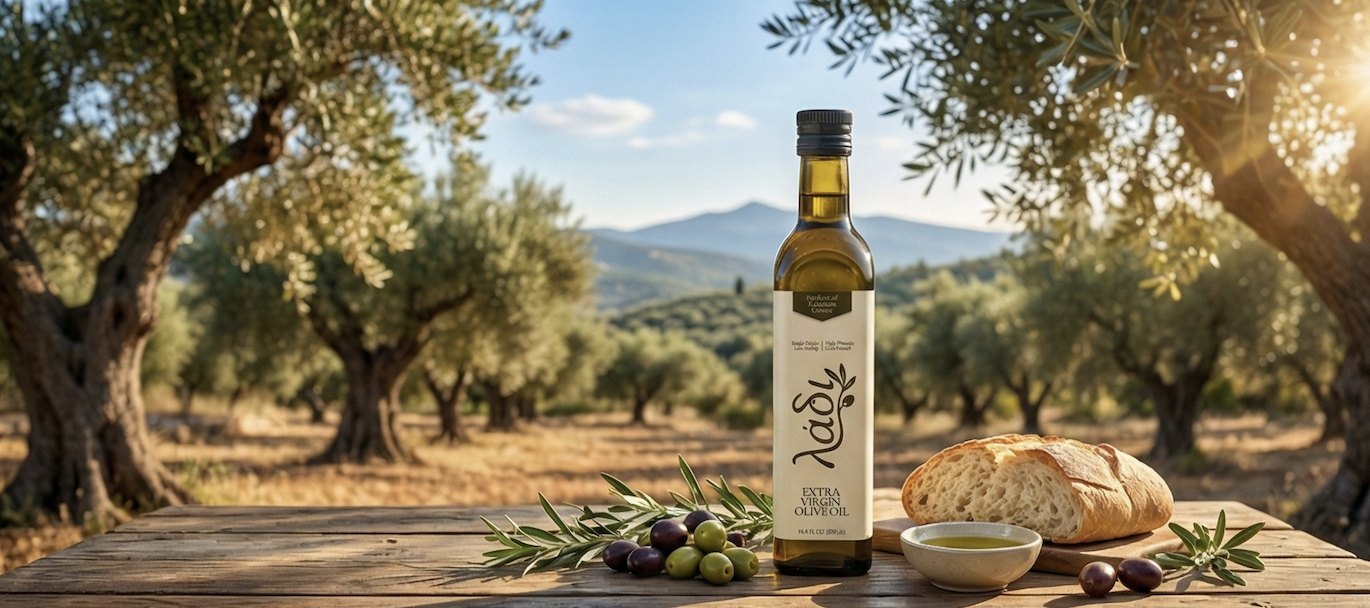


Bread, olives and a bowl of olive oil on a table in an olive grove

Recipes & Uses

The best recipe is
almost no recipe.

Greek cooking doesn’t hide olive oil behind other ingredients. It puts it in the middle of the plate and gets out of the way.

First, a note on heat

Cook with it. Finish with it too.

A common myth is that extra virgin olive oil can’t take heat. It can — its high monounsaturated fat and polyphenol content actually make it more stable than many refined oils at normal cooking temperatures, and Greek kitchens have sautéed, braised and roasted in it forever.

What heat does do is drive off the delicate aromatics. So the practical rule is simple: cook with it freely, then finish the dish with a raw drizzle from the bottle. The second pour is where you taste what you paid for.

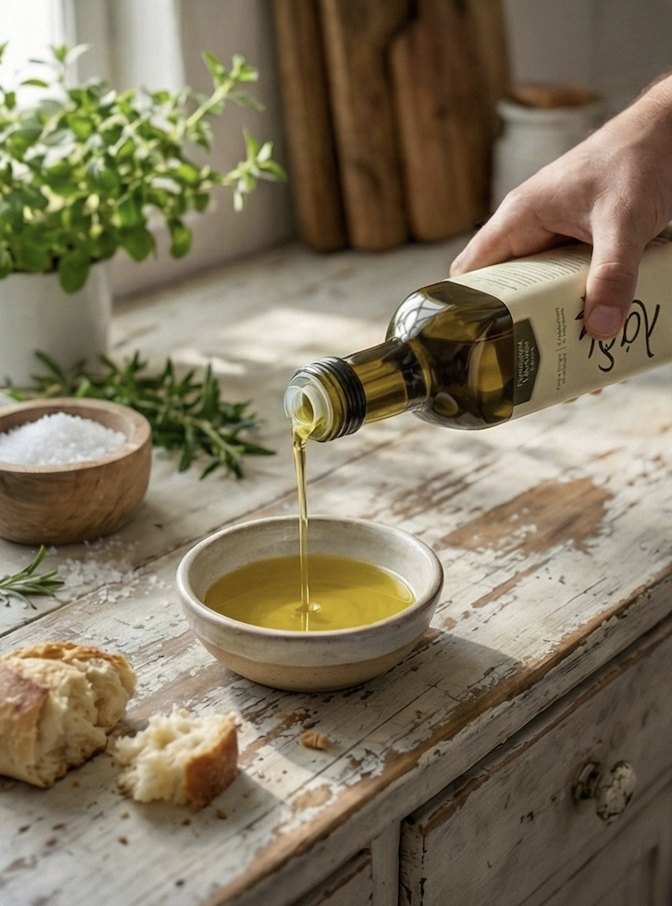
Olive oil being poured into a shallow bowl beside torn bread

Five ways to start

Simple things, done properly.

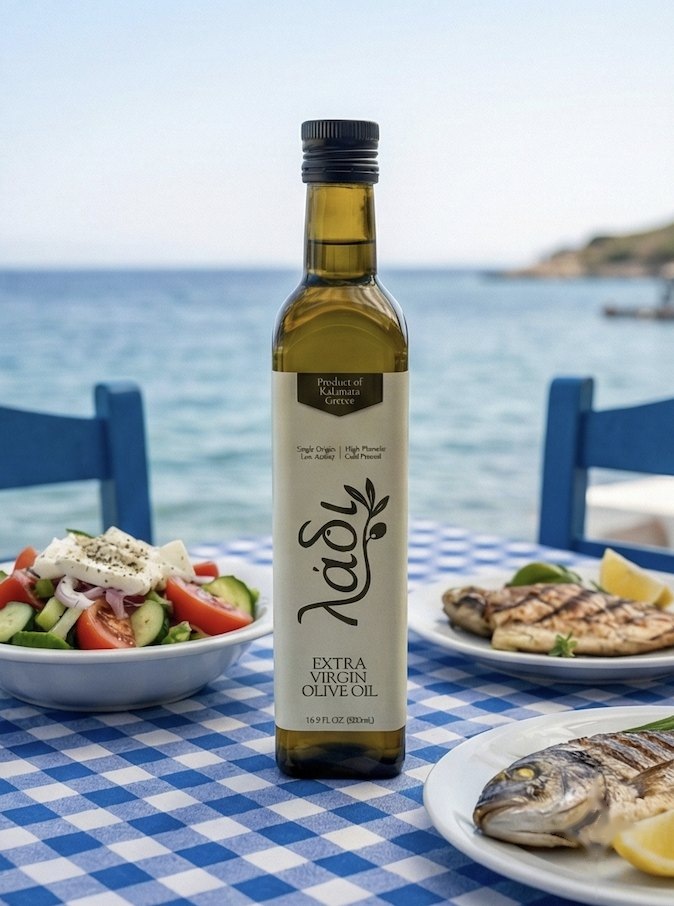
Horiatiki — Greek village salad with feta and olives
Horiatiki · 10 minutes

Village salad

No lettuce, ever. Cut tomatoes into thick wedges and salt them first so they weep. Add cucumber in half-moons, thin red onion, green pepper, and a few Kalamata olives. Lay a whole slab of feta on top, scatter dried oregano over it, and pour the oil generously across the whole thing. No vinegar — the tomato juice and the oil make the dressing in the bowl.

  • Ripe tomatoes, cucumber, red onion, green pepper
  • A block of feta — not crumbles
  • Dried Greek oregano, flaky salt
  • λάδι, poured with confidence
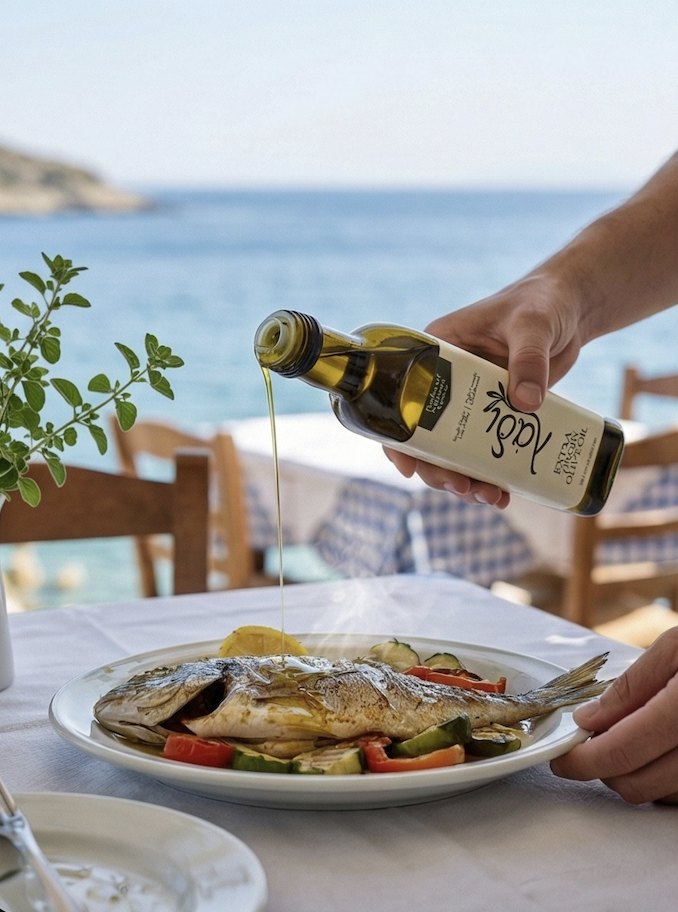
Grilled fish finished with olive oil and lemon
Ladolemono · 3 minutes

Oil & lemon sauce

The single most useful thing in a Greek kitchen. Whisk three parts oil to one part fresh lemon juice with salt, pepper and a pinch of oregano until it thickens and turns pale. Spoon it over grilled fish, chicken, lamb chops, or steamed greens while everything is still hot so it soaks in.

  • 3 parts λάδι, 1 part lemon juice
  • Salt, cracked pepper, dried oregano
  • Optional: a little dijon to hold the emulsion
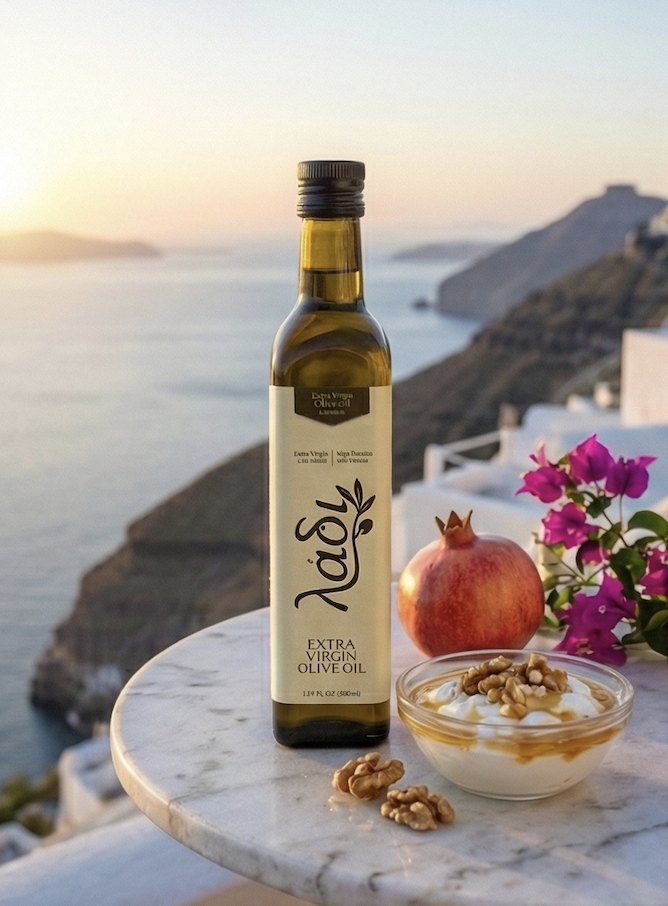
Thick yogurt with honey and walnuts
Breakfast · 2 minutes

Yogurt, honey, oil

Strained Greek yogurt in a shallow bowl. Thyme honey over the top, toasted walnuts, and then — the part people don’t expect — a spoonful of olive oil and a few flakes of salt. The pepperiness of a high-phenolic oil against cold yogurt and honey is one of those combinations that seems wrong until you try it.

  • Thick strained yogurt
  • Honey, toasted walnuts
  • λάδι and flaky salt
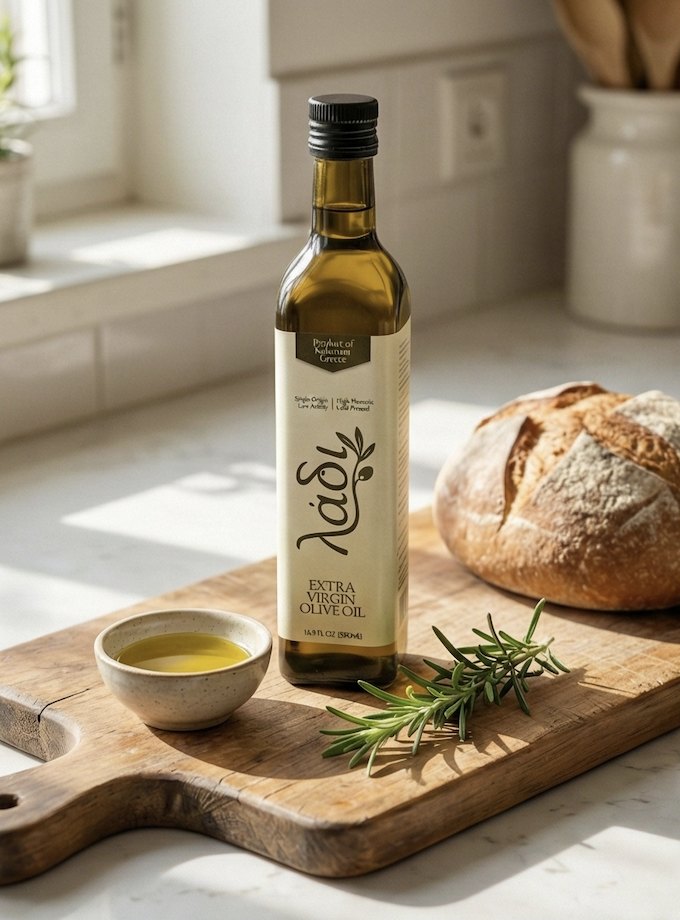
Crusty bread and a bowl of olive oil on a wooden board
Ladenia · 40 minutes

Tomato & onion flatbread

Kimolos-style, and effectively pizza before pizza. Press a simple bread dough into an oiled tray, cover with sliced ripe tomato and thin onion, salt heavily, and pour a good quantity of oil over the whole surface. Bake hot until the edges caramelise. No cheese. The oil is the fat, the flavour and the finish.

  • Bread dough, pressed thin
  • Tomatoes, onion, oregano
  • More λάδι than feels reasonable
Greens, artichokes and lemons on a Greek table
Horta · 20 minutes

Boiled greens

Dandelion greens, chicory, chard — whatever is bitter and in season. Boil in salted water until tender, drain well, and dress while still steaming with a heavy pour of oil and a squeeze of lemon. Eaten weekly across Greece, and the most direct way there is to taste an oil’s character against something bitter.

  • Bitter greens, well washed
  • Lemon, flaky salt
  • λάδι, poured over while hot
Rustic still life with olive oil, herbs and an oil lamp
Anytime · 1 minute

Bread and oil

The test that matters. Pour a shallow pool of oil, tear good bread, and eat it standing at the counter. You should get grass and green tomato on the nose, a soft bitterness across the tongue, and a peppery catch at the back of the throat that makes you cough slightly. That cough is the polyphenols. It means the oil is alive.

  • Bread with an actual crust
  • λάδι, nothing else
Use it like you have plenty.
How olive oil is meant to be treated

Shop the 2025 harvest — $29.99